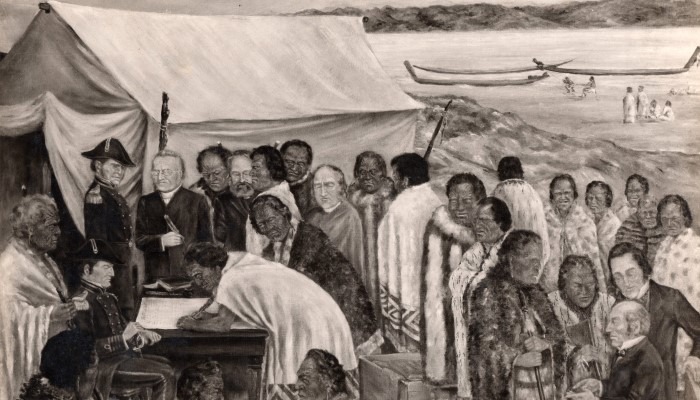
Image credit: The Signing of the Treaty of Waitangi by Ōriwa Haddon from Archives New Zealand on DigitalNZ (2026).
Growing up as I did in small town New Zealand on the Thames Coast, you had a sense that everything was alright with the world, everything was just how it should be – slightly sunkissed, sandy and safe, a world with a brown mother and a white father and two much older sisters adopted into the family. They too were brown (I don’t know that I knew what that meant at the time, only that it felt like a sameness). Everyone I knew was happy with us, and we seemed happy with the world. Adolescence would erode away the feeling of safety. Adulthood would teach me how to rally against the threats and fight for a better way to be brown in a country whose founding document was not even taught in schools.
What do you mean the Treaty wasn’t taught at school?
It’s true! Grow up in the 70s or 80s in New Zealand, and there was zero chance you’d learn anything more about the Treaty other than it was signed. You might learn it was signed in 1840. I mean, we knew there WAS a treaty, and it was some sort of handshake, and there was a place called Waitangi, but I don’t remember much more than some vague propaganda and aren’t we a peaceful, progressive place for having such good native – Pākehā relations (I didn’t know the word coloniser then). The Treaty of Waitangi wasn’t so special that we all had a copy framed in the lounge the way my Mormon friends had pictures of Christ, but we had a treaty! And wasn’t that grand!
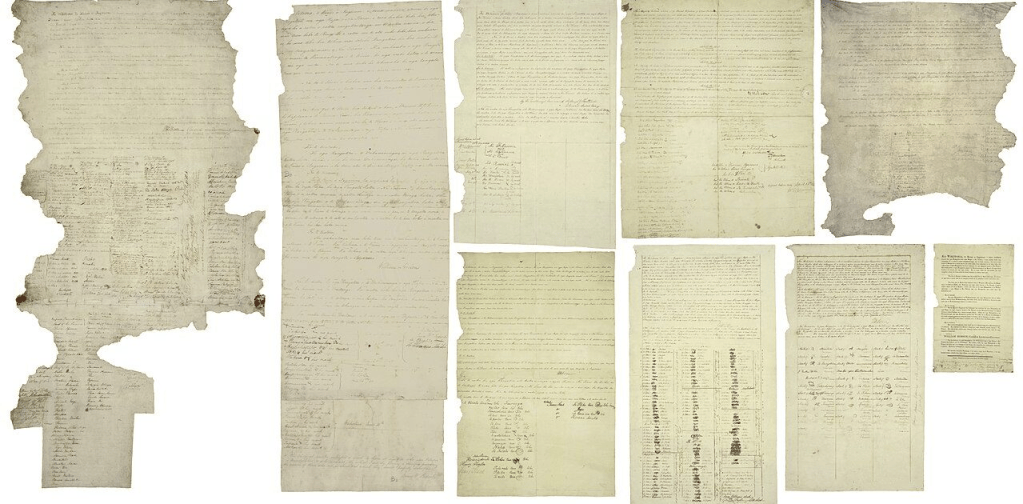
Image credit: waitangi.org.nz depicting “the 9 sheets that make up our treaty – 7 on paper and 2 on parchment which was nibbled away by rats” – One Treaty, Two Languages, 9 Sheets. (Waitangi Treaty Grounds, 2023)
Widely regarded as the most important document in our country’s history, we knew it was important, just not important enough to be taught in schools. In fact, just about everything Māori or Māori adjacent was ignored or diverted away from. We learned nothing of muskets and blankets and disease (we had to find out about that from Billy T) and nothing about the land wars; Parihaka was a place by Mount Egmont, and Hauhau wasn’t part of the Pai Mārire movement; it was what you called a Māori who looked unkempt. So let’s get it straight: the real unbiased history of Aotearoa both pre and post-colonisation (if colonisation ever really ends) was never taught in schools at any level in any part of the country. The Treaty might have meant something to someone, but it wasn’t the Education Ministry.
It wasn’t until I had the great privilege (a privilege I paid for, whereas all the politicians in the house at that time had received their university study scot-free) of getting accepted to study law, politics, English and Māori at Victoria University in Wellington, that I would slowly have light shined into rooms I hadn’t even known had been boarded up. This would be the first time I learnt there were two versions of the Treaty – one in English and one in Māori – and why that was such a big deal. This was 1994, more than 150 years since the damn Treaty was signed, and I was learning for the first time that one version was inherently incorrect (or at least erroneously translated), while the other was never acknowledged in mainstream.
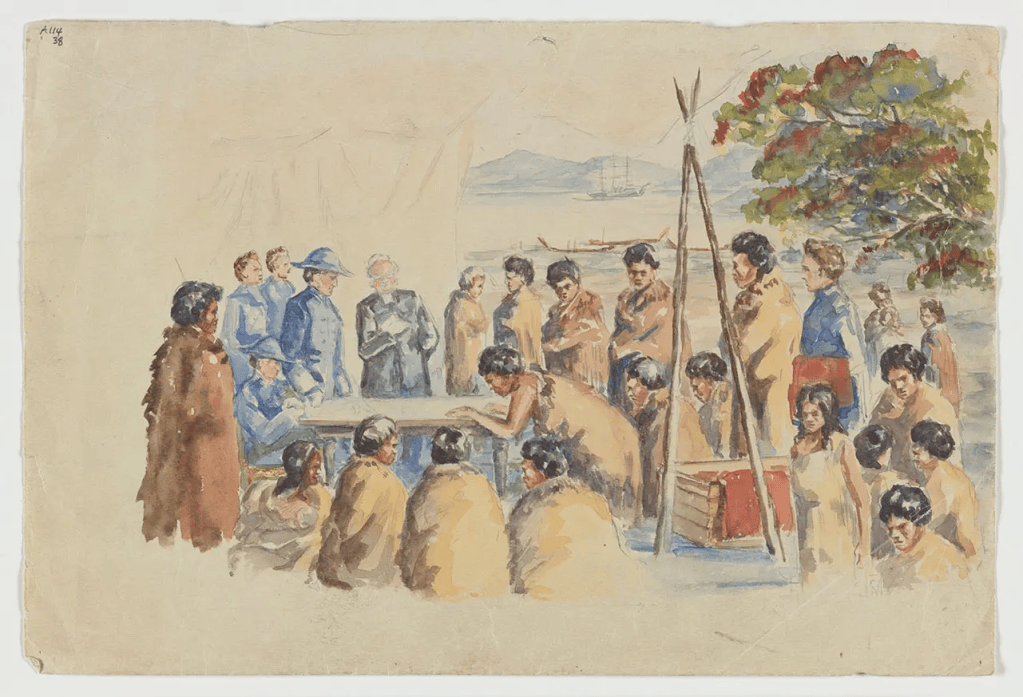
Image credit: Reconstruction of the Signing of the Treaty of Waitangi, ca 1940 or 1930s attributed to Oriwa Tahupōtiki Haddon. Ref: A-114-038 Alexander Turnbull Library (Haddon, ca. 1930 – 1940)
It was devastating. I was angry for a long time. I was stunned. I was inspired. I was enlightened! Then I was angry again. A document meant to protect Māori rights and their rights to self-governance was belittled. And this quietly hinted at something that had rattled around in my prepubescent brain so long ago. Because eventually even kids notice the way bank-tellers speak to their brown mothers, or how their brown mothers became quiet and unremarkable during times of conflict in public spaces. We weren’t “sunkissed, sandy and safe”… we were disenfranchised and sanitised, othered, whitewashed, destabilised, and, if the colonisers had had their way, fading with the “beige-ing” of a nation. “Let them keep action songs and haka and poi-swinging,” cried the powers that be. “Let the friendly natives dance and smile and sing!” (like Billy T). When I look back on it now, I think authorities had probably hoped our collective memories of scorched earth policies, musket wars and the attempted annihilation of entire past generations would be diluted by the whiskey, TB and dysentery.
Turning of the tide
Te Tiriti o Waitangi was signed in 1840 and, like much of New Zealand’s Māori history, it went largely ignored by courts and subsequent governments; one infamous judge in the 1870s dismissed the Treaty outright as a “simple nullity” (Manatū Taonga, 2020). But thanks to the large political and legal activism from indigenous and allied communities, the Treaty would eventually win out, giving Māori valuable legal and moral victories.
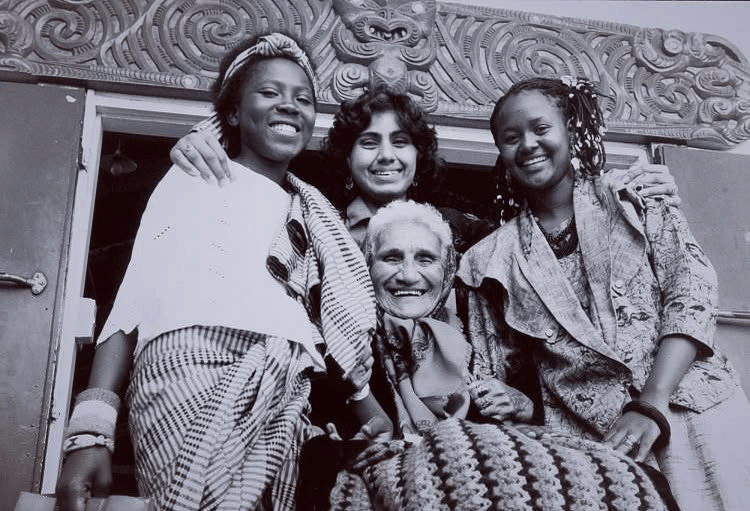
Image Credit: “Commonwealth cousins, Māngere, 1990. Dame Whina Cooper meeting young people of the Commonwealth (Ritna Otoo from Ghana, Hina Siddiqui from Pakistan, and Joyce Fissoo from Tanzania) at Te Puea Memorial Marae in Māngere on 7 February 1990, when New Zealand hosted the Commonwealth Games – Auckland Libraries (n.d.)
One of the great catalysts for change would be Dame Whina Cooper and her hīkoi to Parliament, but much of what led to that hīkoi is often left out of historical narratives. First was the establishment of the Māori Women’s Welfare League, which was founded in 1951, with Princess Te Puea Herangi as its first patron and Dame Whina Cooper as their first President.
The League’s first conference was attended by more than 2-and-a-half-thousand people from nearly 200 branches (Newswire, 2026). By 1956, the League had more than 300 branches and 4-thousand-plus members. Dame Whina stepped down from the position in 1957. During her farewell at the organisation’s annual conference, Dame Whina was given the title of Te Whaea o te Motu, which she kept until she died nearly four decades later.
In the mid-70s Ngā Tamatoa came into being, and was led by influential young up-and-coming Māori including Labour MP Willie Jackson’s uncle, Syd Jackson, Tāme Iti (Ngai Tūhoe), Rawiri Paratene (Whalerider and Shortland Street) and Hana Te Hemara, who was a key figure in the historic te Reo Māori petition delivered to Parliament in 1972.
While Dame Whina and Ngā Tamatoa may not have seen eye to eye on all issues, they, and other roopu Māori, came together in March of 1975 at Te Puea Marae in Māngere, to develop a plan aimed at stopping unfair land laws like the 1953 Māori Affairs Act (and later amendment), which gave greater power to the Government around compulsory acquisition of land. And so Te Rōpū Matakite o Aotearoa was born, with Dame Whina at the helm.
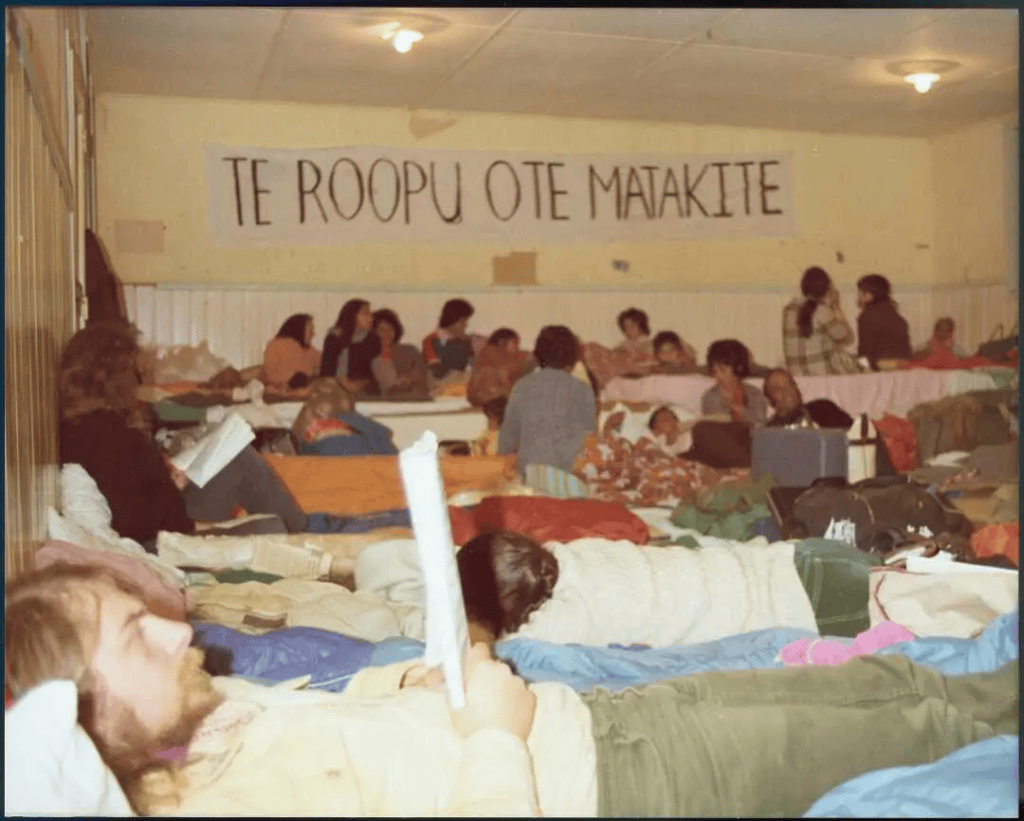
Image credit: Christian Heinegg, Ref: PA7-15-09 Alexander Turnbull Library. Māori Land March demonstrators bedding down for the night at Te Hapua marae, 13 September 1975.
Thus began the hīkoi to Parliament – led by Te Whaea o te Motu – from Te Hāpua to Te Whanganui-ā-Tara. The group would walk around 1,100 kilometres in the space of four weeks. They delivered their petition, signed by around 60-thousand people, to Parliament on October 13 1975.
The flow-on effect of these events led to legislative change and an uprising of sorts around Māori protest and a nation’s identity. The Treaty of Waitangi Act 1975 established the Waitangi Tribunal and brought the Treaty into New Zealand law. A decade later, another law change would pave the way for grievances dated all the way back to 1840 to be addressed (Orange, 2012).
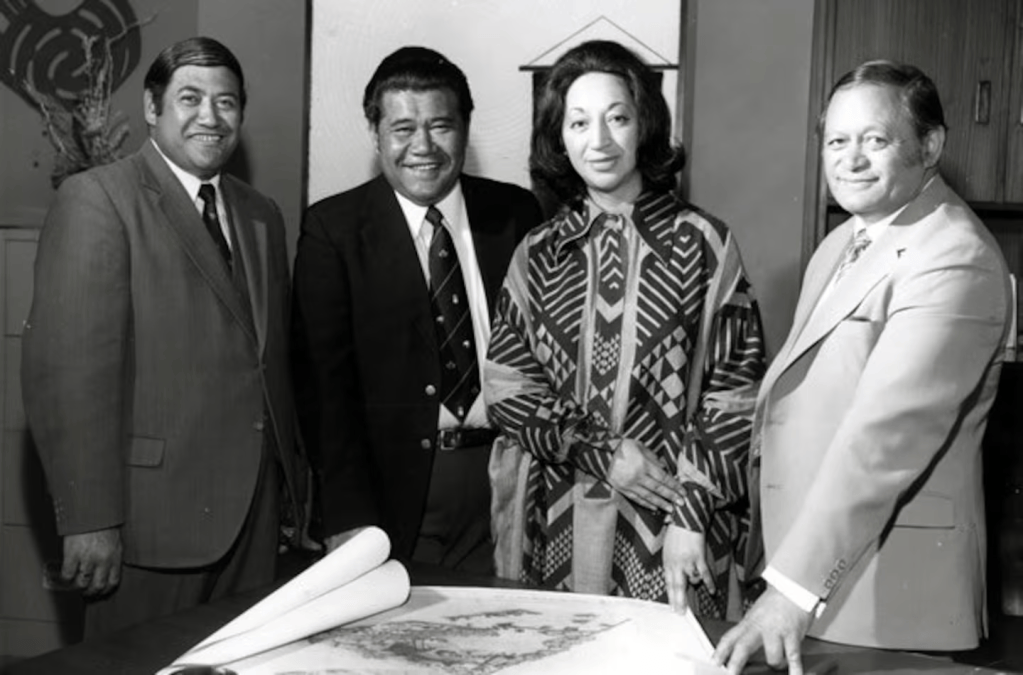
Image credit: Māori MPs of the 1975 Labour government, when the Waitangi Tribunal was established. From Left: Koro Wetere (Maniapoto), Minister of Māori Affairs Matiu Rata (Ngāti Kuri), Whetu Tirikātene-Sullivan (Ngāi Tahu, Ngāti Kahungunu) and Paraone Reweti (Ngāti Ranginui) – Te Ao Māori News (2025)
During this time, the Bastion Point peaceful protest in 1977-78, led by Joe Hawke, who had walked with Dame Whina, also put Māori front and centre, showcasing the travesties inflicted on Māori landowners (Manatū Taonga, n.d.). Takaparawhau protestors held on for 506 days before they were forcibly removed by Police, May 25 1978.
A few years later, the country would go global for the uprising against the 1981 Springboks Tour and apartheid (Manatū Taonga, 2020). It was a period of political awakening and activism around human rights, global threats like nuclear testing (Te Ara, 2023), and what people really wanted our country to stand for.
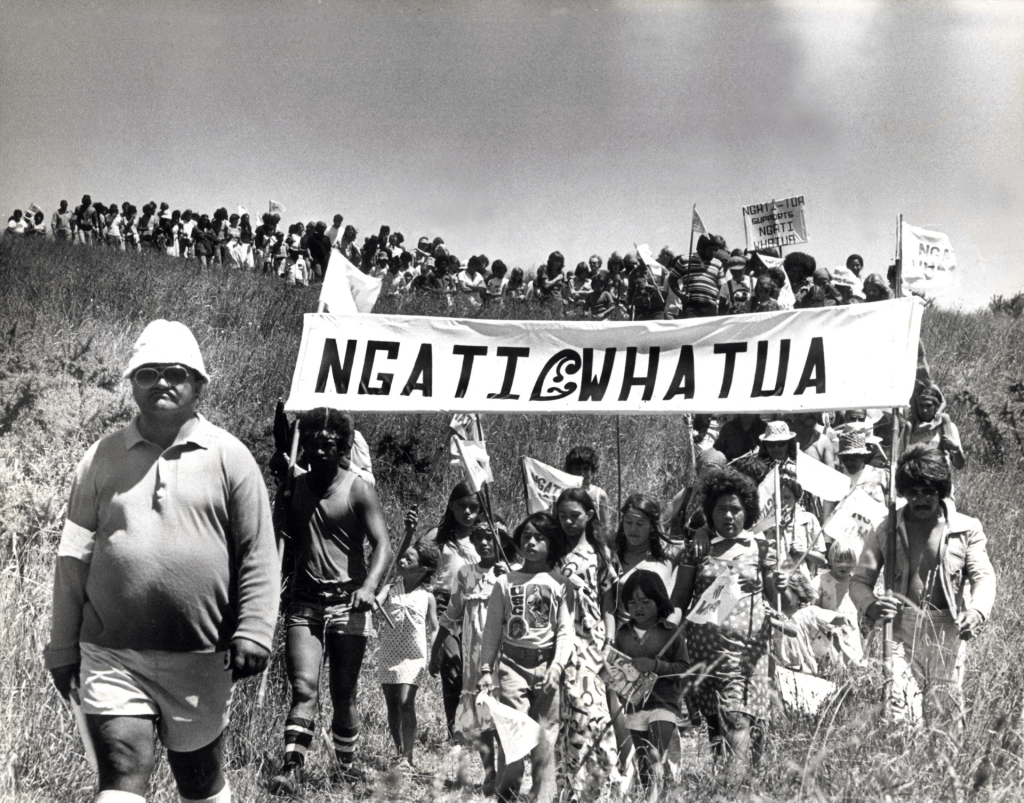
Image Credit: Ngāti Whātua protesters marching on the disputed land at Bastion Point on March 16, 1977 – NZ Herald.
Thanks to the “browning” of a nation, and the Kohanga Reo (Manatū Taonga, 2022) generations maturing and propagating (the Kohanga Reo movement needs a blog of its own), Māori, Te Reo Māori me ōna tikanga and iwi Māori are experiencing a resurgence in modern times. More graduates, and uni-educated Māori speakers like me, are raising their voices in everyday ways to make sure the balance, whilst not righted, is at least not completely whited. Fierce wāhine Māori who are immensely qualified in Pākehā-recognised institutions like Dr Leonie Pihama, Dr Ella Henry and Former Adjunct Professor at the Faculty of Law at Auckland University, Annette Sykes, are leading the way, fearlessly rebutting misconceptions and untruths around Māori and the Treaty. They follow in the footsteps of our other great leaders like Dame Whina Cooper, Te Puea Hērangi, Titewhai Harawira, Vapi Kupenga and Te Arikinui Dame Te Atairangikaahu, women paving the way for today’s kaiwhakahaere, matatau ki Te Reo Māori (fluent Māori-speaking leaders).
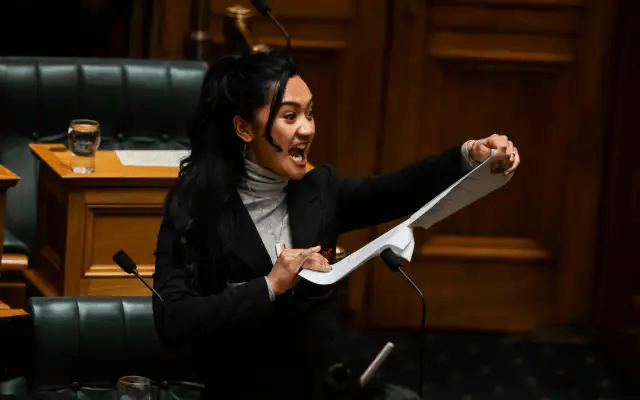
Image credit: Te Pāti Māori MP Hana-Rāwhiti Maipi-Clarke was among those to perform a haka at Parliament, after the first reading of the Treaty Principles Bill, on 14 November, 2024 – RNZ/Samuel Rillstone
Our younger voices include Hana-Rāwhiti Maipi-Clarke, Tina Ngata, Oriini Kaipara and Pania Newton (who led the Ihumātao occupation). Maipi-Clarke – who is our youngest elected MP in history – went viral for her strong representation of tikanga and tūturu Māori lore when she performed a haka during her maiden speech. She then made global headlines when she tore up a copy of the contentious Treaty Principles Bill (introduced by the far-right, minority coalition partner, ACT) while performing “Ka mate”, a profoundly powerful and infamous haka written by Te Rauparaha in the 1800s, in Parliament. This singular act lit a fire beneath the feet of Māori activism, especially among the new wave of highly educated and fluent rangatahi Māori. It also shone an important spotlight on the inequities in our own parliamentary system – if Māori are Treaty partners, why is their tikanga (like Maipi-Clarke’s haka) not recognised in the House, and even punishable? Immediately after Maipi-Clarke’s haka against the Treaty Principles Bill, Speaker of the House Gerry Brownlee named her conduct “grossly disorderly”, resulting in an initial 24-hour ban from Parliament and docked pay (Hanley and McCulloch, 2024). The fact that tikanga is not recognised in the House is a further indication of just how unbalanced the Treaty “partnership” is, especially in positions of power. I once mentioned this absurd lack of kawa and tikanga in New Zealand’s legal and political lore to my guest lecturer, Sir Geoffrey Palmer, at Victoria University once. He had zero answers. That was 1994. Hana-Rāwhiti’s haka was 30 years later.
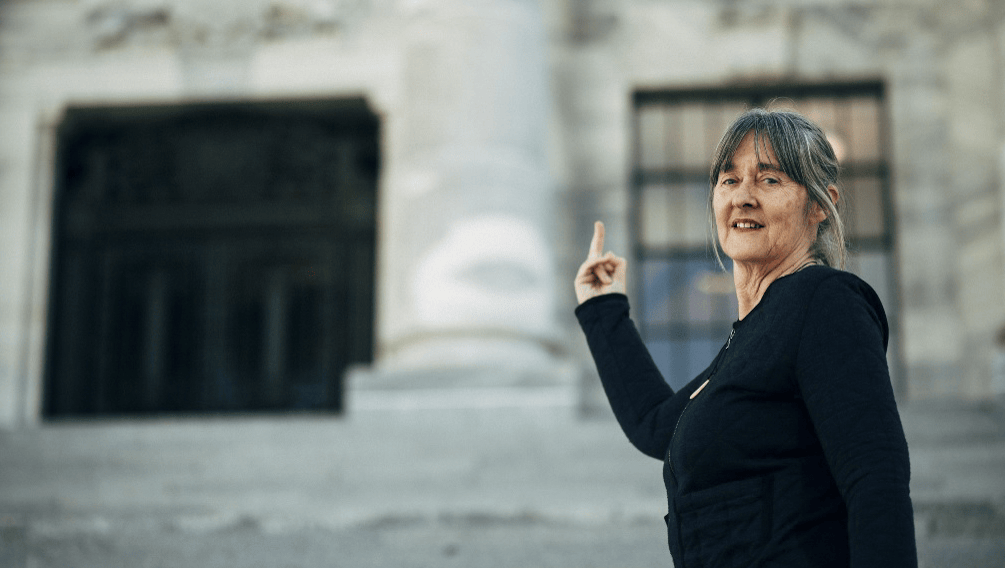
Image Credit: E-Tangata. Catherine Delahunty, saying goodbye to Parliament after nine years as a Green Party MP – Delahunty, 2021
I think it only fair too to acknowledge powerful allyship and those who understand how to walk beside Māori in this journey, women like former Green MP Catherine Delahunty who runs treaty workshops for Pākehā. I don’t need Pākehā to speak for me, but boy can that woman speak at Pākehā. There’s something very powerful about the way Catherine can hit home with harsh truths and harsh language to match; truths and language that would never be tolerated out of the mouths of Māori in a white setting.
Despite the Treaty Principles Bill causing harm and division in recent times, Māori on the kaupapa understand that the battle is difficult, and the road is long and hard. Sometimes I wish we could have the ease of life existence referred to by some as “white privilege” (I hate that term), a perceived sort of wanderlust way of walking through the world, and the world in turn just turning up. But Māori have experienced the opposite: a total dispossession of all they had, and then being gaslit for over a century. With the efforts of all those who walked before us weighing heavily on our hearts, there is no time to lay down, only time to get back up. We celebrate the amazing progress our country has made, mourn the backwards slide that came far too easily under a coalition government with far-right alliances, and get back up. As a kid, I used to say even being Māori was political. I stand by that. If you’re brown in this country, you have no choice but to start figuring out what kind of armour you’re able to endure wearing every single day, even if that armour looks like being colonised.
So what does Te Tiriti mean to you?
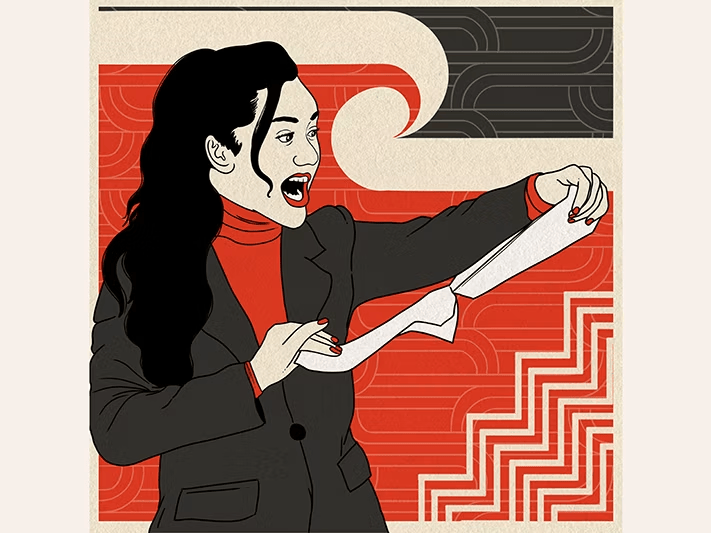
Image Credit: Illustration by Huriana Kopeke-Te Aho (Tūhoe, Ngāti Porou, Rongowhakaata, Te Āti Haunui-a-Pāpārangi, Ngāti Kahungunu) features a portrait of Te Pāti Māori Member of Parliament Hana-Rāwhiti Maipi-Clarke ripping up a copy of the Principles of the Treaty of Waitangi bill on 14 November 2024.
The Treaty is our founding document. It binds two parties – The British Crown and Māori. And hardly anyone acknowledged it in any meaningful way through the majority of my first two decades on the planet. Contrast this with the way Americans (that is to say, residents of the United States of America as opposed to residents of the North and South American continents) are taught to celebrate their Constitution. Of course, you can’t compare the two outright, as the US’ history of annihilating indigenous populations is sickening, as is their history of black slavery. But it is nuts to think us 80s and 90s kids knew close to nothing about, not only the Treaty, but also the existence of two versions – one in Pākehā and the other in Māori.
The misinterpretation of the Māori text for the last nearly 200 years is not the focus of today’s rant, but it probably should be. You can find out here why international legal principles support the Māori text being the primary version considered (Murphy, 2021). All I’ll say is, under international law, a treaty must be understood as the indigenous signatories understood it (Human Rights Commission, n.d.). Otherwise, the Crown could be seen as acting or having acted in bad faith. Here are some of the main themes:
- Tino Rangatiratanga: Guarantees absolute self-determination and authority over tribal lands, forests, fisheries, and cherished possessions (taonga).
- Kāwanatanga: Grants the Queen a focused power to govern British settlers, maintain order, and keep the peace, rather than taking away Māori control.
- Equal Rights: Promises Māori the same legal rights, protections, and duties as British citizens under Article 3.
- Partnership: Establishes a relationship between equal partners rather than a surrender of sovereignty by Māori chiefs (Human Rights Commission, n.d.)
So the Treaty to me is different to the journey Te Tiriti takes you on. While the words in Te Tiriti may not have changed, how they have been interpreted and misinterpreted has, but only because people fought for that legal recognition. It’s being taught in schools! And yes, it is still being weaponised (RNZ, 2026). Now in my fifth decade here, I see the Treaty as a binding document between the two treaty partners, giving Māori a unique position of power. That power has been used to symbolise a false threat to non-Māori in recent times, which is a continuation of the attempted diminution of Māori and indigenous rights. Colonisation doesn’t end.
The Treaty, though, is uniquely ours. It shows how much foresight our forefathers had – to have a legally binding document signed, sealed and delivered to the British Crown in the only language the British Crown can’t argue with – legal language. Without the Treaty, where would we be? It’s not perfect, but it is ours. All of ours. And we should be doing everything we can to re-educate our people on it, about it, with it and for it.
Toitū te Tiriti!
Ka whawhai tonu mātou!
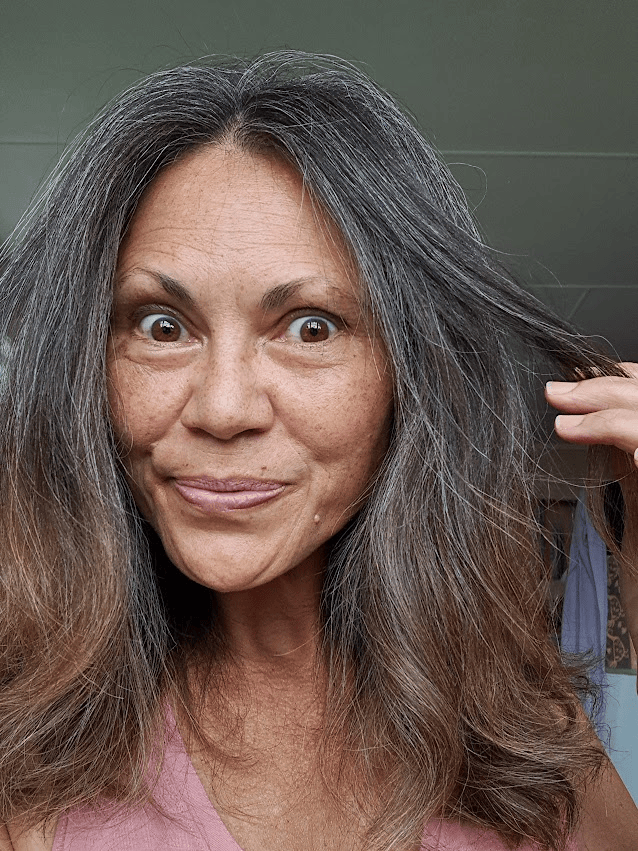
Aroha Hathaway
This is a passion project! And AROHART. and Project Aroha continue to grow and evolve as websites for Māori art and cultural revolution. Aroha is based in Hauraki and works in media and the arts.


Leave a Reply